
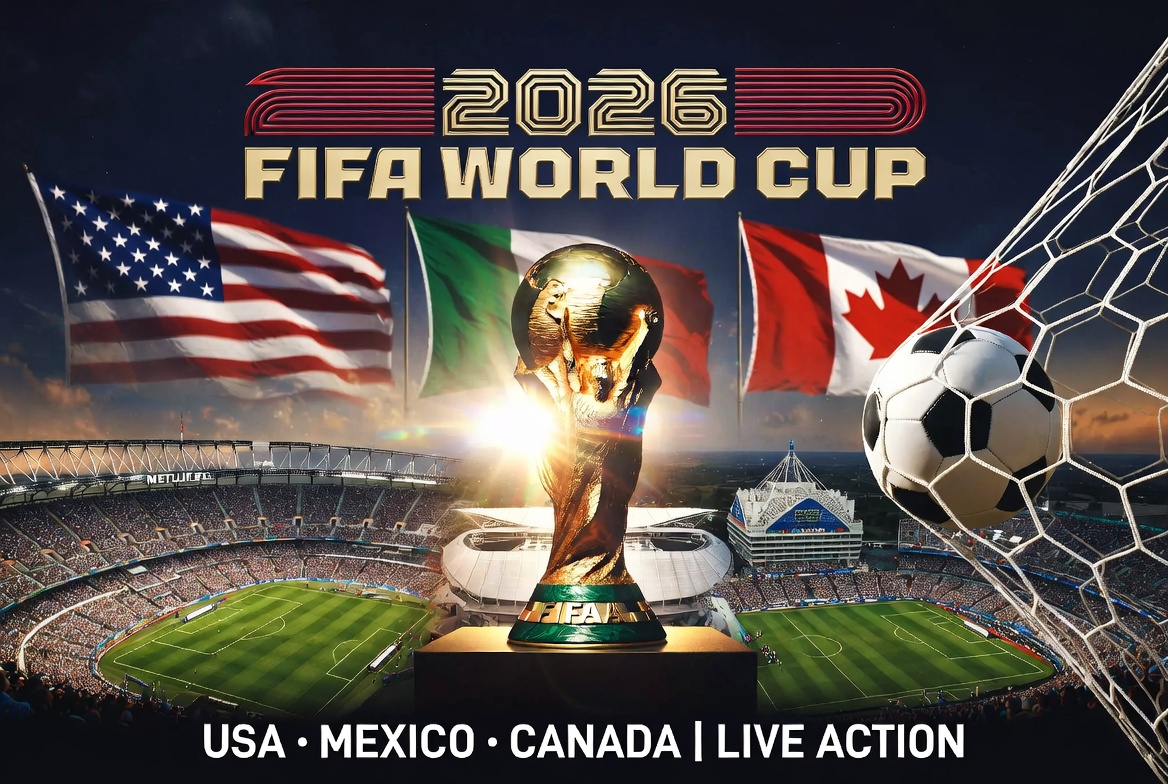
As the world tunes in, the 2026 FIFA World Cup has officially kicked off — and it is already living up to its promise as the biggest and most ambitious edition in the tournament’s illustrious history. Co-hosted by Canada, Mexico, and the United States, the 23rd edition of football’s premier competition began on June 11, 2026, and will run until the grand finale on July 19. For the first time ever, 48 teams are battling it out across three nations in a spectacle spanning 104 matches and 16 host cities.
A Historic First: Three Nations, One Dream
The 2026 tournament marks several groundbreaking milestones. It is the first World Cup jointly hosted by three countries and the first to feature an expanded 48-team format. Mexico becomes the first nation to host three men’s World Cups (after 1970 and 1986), while Canada is hosting the men’s tournament for the very first time. The United States, which last hosted in 1994, brings its world-class infrastructure to the party.
Sixteen dazzling stadiums are ready to welcome millions of fans: 11 in the USA, three in Mexico, and two in Canada. Iconic venues include MetLife Stadium (New York New Jersey) — which will host the final on July 19 — Estadio Azteca in Mexico City (opening match), SoFi Stadium in Los Angeles, AT&T Stadium in Dallas, BC Place in Vancouver, and many more. These modern arenas promise not just football, but unforgettable atmospheres.
Format and Excitement: More Teams, More Drama
With 48 teams divided into 12 groups of four, the group stage alone features 72 matches. The top two teams from each group, plus the eight best third-placed sides, advance to a 32-team knockout stage. This expanded format gives more nations — including several debutants or returning underdogs — a realistic shot at glory and ensures high-stakes drama from day one.
Early matches have already delivered thrills. Fans are witnessing passionate crowds, stunning goals, and the unique cross-border energy that only a multi-nation hosting can create.
Economic and Cultural Impact
Beyond the pitch, the 2026 World Cup is a massive economic and cultural boost for North America. Billions of dollars are flowing into infrastructure, tourism, and local economies. FIFA Fan Festivals in cities like Los Angeles and fan zones across the continent are turning the entire region into one giant celebration of the beautiful game.
For African football fans — including Ugandans — this edition carries extra significance. More slots for CAF teams mean greater representation and inspiration for young talents back home. The presence of global superstars and rising African talents on this grand stage will undoubtedly fuel dreams across the continent.
What to Expect in the Coming Weeks
With the group stage well underway, attention will soon shift to the knockout rounds. Will defending champions Argentina continue their dominance? Can European powerhouses like France, England, or Germany reclaim the throne? Or will an underdog story emerge from Africa, Asia, or the Americas?
The 2026 World Cup is more than a tournament — it is a celebration of unity, passion, and the universal language of football. As matches unfold across iconic stadiums from the Pacific to the Atlantic, one thing is certain: history is being written in real time.
Stay locked on TrendingUg.com for exclusive updates, match analyses, player spotlights, and everything you need to follow Uganda’s favourite global spectacle.