
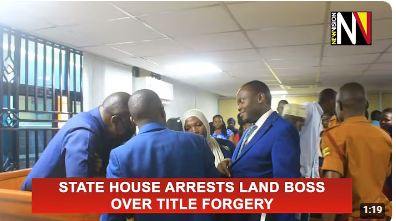
Kampala, A senior land official has been arrested by State House operatives over allegations of issuing 265 illegal land titles. One serious claim involves the systematic reduction of former Vice President Edward Ssekandi’s 83-acre estate in Kyanamukaaka, Masaka District.
According to preliminary reports, the official is accused of helping create fraudulent titles that allegedly reduced Mr. Ssekandi’s landholding from 83 acres to just 34 acres. Investigators say that the seized land was then subdivided and allocated under new titles. This arrest is part of a wider investigation into irregularities in the land registry and the processing of titles that authorities describe as illegal.
State House sources confirmed that the suspect was detained in connection with the mass issuance of disputed titles. Detectives are looking into how the official allegedly bypassed established verification procedures, including surveys, ownership checks, and approval processes required under Uganda’s land laws. The investigation also explores possible collusion with private surveyors and intermediaries who may have profited from the transactions.
This case has drawn significant public attention because it involves the property of a well-known former national leader. Mr. Ssekandi was Vice President of Uganda from 2011 to 2021 and remains a respected figure in national politics. Reports suggest that the alleged manipulations of his Masaka estate were among the main reasons that prompted State House to intervene.
Land fraud continues to be a major problem in Uganda. Thousands of Ugandans still lose property through forged titles, double allocations, and illegal land subdivision. Previous governments have tried to reform and digitize the land registry, but cases like this keep arising. Some observers view the current arrest as a sign that authorities are stepping up efforts to tackle high-level corruption related to land.
Police and State House investigators have not released the full identity of the arrested official or details about any co-accused individuals. However, sources close to the investigation indicate that more arrests could occur as they look into the paperwork for the 265 titles. Forensic analysis of registry documents, survey maps, and financial records related to the transactions is reportedly underway.
Legal experts note that if the allegations are proven in court, this case could set a significant precedent for accountability in land administration. A conviction on charges of forgery, abuse of office, or causing financial loss could lead to lengthy prison sentences and the cancellation of the disputed titles.
For ordinary citizens, this situation highlights their continued vulnerability regarding land ownership in the country. Many Ugandans still rely on paper-based systems and face long, costly processes when trying to secure or defend their property rights. Advocacy groups have long pushed for quicker digitization, stricter oversight of land officers, and better protection for legitimate title holders.
As investigations proceed, the public awaits further official statements from State House, the Ministry of Lands, and the Uganda Police Force. The arrest has already become one of the most talked-about topics in Uganda, reflecting widespread concern over land justice and the integrity of public institutions responsible for safeguarding property rights.
The case is active, and more developments are expected in the coming days.