
The Ministry of Agriculture, Animal Industry and Fisheries has intensified efforts to protect Ugandan farmers from the growing impact of climate change by promoting quick-maturing and drought-tolerant crop varieties alongside expanded irrigation systems.
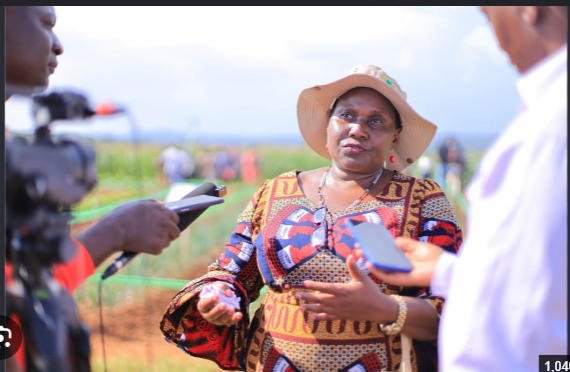
Dr Mary Teddy Asio, Assistant Commissioner for Seed Inspection and Certification, made the announcement during the 2026 Agribusiness Expo for the Central Region, organised by the Eastern Africa Grain Council and the International Institute of Tropical Agriculture (IITA) at the Sendusu Station in Namulonge.
Speaking under the theme “Promoting Resilient Food Systems for Improved Household Incomes and Food Security,” Dr Asio said changing weather patterns are already cutting into farm yields across the country.
“Global warming is affecting farming. Farmers need varieties that can mature before the rains run out or produce yields with little water,” she said.
She revealed that IITA and the National Agricultural Research Organisation (NARO) have developed improved varieties of maize, millet and sorghum that perform well under limited rainfall. Many of these seeds have already been distributed in Karamoja, one of the regions hardest hit by prolonged dry spells.
“A lot of them have been given to Karamoja because they mature quickly and they mature with little water,” Dr Asio noted.
Beyond seeds, the ministry is pushing for wider access to irrigation. Officials are developing a national irrigation project that could be rolled out countrywide once funding is secured from the Ministry of Finance. In the meantime, the World Bank-funded Uganda Climate Smart Agricultural Transformation Project continues to supply irrigation systems to farmers free of charge.
“We are trying to roll out irrigation because there is no other option at the moment with the state that we are now,” Dr Asio emphasised.
The move comes as Uganda grapples with increasing climate shocks that have left millions food insecure, particularly in the north-east. Experts say early-maturing varieties and reliable water for production will help stabilise yields, protect household incomes and strengthen national food security.
Farmers at the expo welcomed the initiative but called for faster distribution of the new seeds and practical training on irrigation use.
Government has pledged to scale up these climate-smart solutions in the coming seasons as part of broader efforts to modernise agriculture and build resilience against unpredictable weather.