
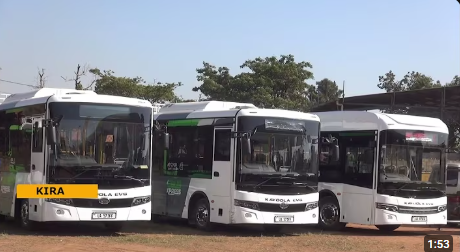
In a significant step toward modernizing public transport in Uganda’s capital region, E-Bus Xpress Kiira Ltd (EBX), a subsidiary of the state-linked Kiira Motors Corporation, has deployed 15 locally manufactured Kayoola electric buses on key routes serving Kira Municipality and linking it to Greater Kampala. The rollout, which began around late August 2026, expands the growing electric bus network into one of the metropolitan area’s fastest-growing residential zones and offers residents a cleaner, more reliable alternative to the often overcrowded and aging taxi fleet.
The 42-passenger Kayoola 7M EVS buses operate on three dedicated feeder routes with five buses assigned to each. These include Ntinda–Najjera–Kira–Kitukutwe–Kiwologoma–Nakwero; Ntinda–Naalya–Kyaliwajjala–Namugongo–Sonde; and Ntinda–Kisasi–Kyanja–Kungu. The services connect suburban communities to the Ntinda hub and onward into Kampala, addressing longstanding challenges of multiple connections, unpredictable waits, and variable fares that many residents face daily.
Passengers benefit from scheduled operations, air conditioning, onboard Wi-Fi, modern safety features, and a fully cashless payment system. Adult fares start at Shs 800 and student fares at Shs 400, varying by distance. Cash is not accepted on board. For students, EBX has introduced a School Cashless Days Campaign featuring smart digital wristbands for convenient payments. These amenities mark a clear upgrade from many conventional matatus and taxis that dominate Greater Kampala’s roads.
The timing is deliberate. The launch coincides with major road upgrades in Kira and a government 100-day crackdown, known as Operation Ganyegenya, targeting taxis in dangerous mechanical condition across the Greater Kampala Metropolitan Area. Authorities aim to improve safety while providing structured mass-transit options for the region’s estimated five million residents, who generate more than two million public-transport journeys daily.
Beyond convenience, the electric buses deliver environmental and economic gains. Zero tailpipe emissions and quieter operation help combat air and noise pollution in a rapidly urbanizing area long plagued by diesel and petrol exhaust. Local manufacturing by Kiira Motors supports Uganda’s industrialization and energy self-reliance goals, reducing reliance on imported fuel. Every electric kilometre driven saves foreign exchange that would otherwise be spent on petroleum products.
This expansion builds on earlier milestones. EBX began operations in the Greater Kampala Metropolitan Area in May 2026 with an initial fleet on central routes such as City Square–Ntinda, following a successful pilot in Jinja. National ambitions are ambitious: officials target up to 300 electric buses in Greater Kampala in the coming years and 1,500 buses across 14 urban centres by around 2030, backed by charging infrastructure.
For residents of Kira and surrounding neighbourhoods, the new service promises more predictable travel times, greater comfort, and safer journeys. It also signals a broader shift in Uganda’s urban mobility strategy—from informal, often chaotic systems toward organised, sustainable, and technology-enabled public transport. While challenges such as dedicated bus lanes and further fleet growth remain, the arrival of these 15 Kayoola electric buses represents tangible progress toward a cleaner, more efficient Greater Kampala.
As the buses begin regular service, they stand as both a practical solution for daily commuters and a symbol of Uganda’s commitment to home-grown innovation in tackling the twin pressures of urban growth and climate responsibility.