
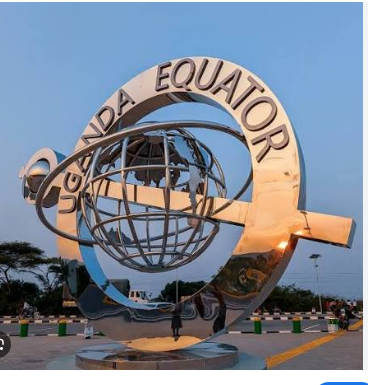
KASESE — The dusty stretch of the Mbarara–Kasese highway that has long served as a quick photo stop for travellers is slowly turning into something bigger. Construction of the Shs9.7 billion tourism complex at the Kikorongo Equator Monument is now firmly underway, and locals say the change is already visible.
Minister of Tourism, Wildlife and Antiquities Col. (Rtd) Tom Butime broke ground for the project in early July. The works, being handled by Kwed Construction Limited on 2.7 acres of land given by the Uganda Wildlife Authority, are expected to take about 18 months. When finished, the site will have an information and interpretation centre, two small museums, a restaurant, a viewing deck, craft stalls and bigger parking space for buses and private cars.
For years the equator line here has been a simple roadside attraction. Drivers heading to Queen Elizabeth National Park or the Rwenzori Mountains would stop, take a few pictures standing with one foot in each hemisphere, buy a soda or a wooden carving, and move on. Last year the site received more than 100,000 visitors. UWA officials say the numbers keep rising, but the facilities have not kept up.
“People come and they want to stay longer, but there is nowhere to sit properly or learn something new,” said one of the craft sellers who has worked at the monument for over a decade. “Now they are building real toilets, a place to eat and even museums. That is good for us.”
The planned museums will tell two stories — one about the geography of the equator and another about the culture of the people who live around the Rwenzori. A viewing deck will look out over the wildlife corridor that links the protected areas nearby. Officials hope the extra facilities will encourage tourists to spend more time and more money in the area instead of just passing through.
Community members living close to the monument are watching the project with mixed feelings of excitement and caution. Some fear that bigger crowds could bring noise and pressure on land. Others see jobs — for builders now, and later for guides, cooks, cleaners and sellers of local crafts.
“If they give us space to sell our baskets and honey inside the new market, then it will help many families,” said a woman who makes crafts from banana fibre. “We just hope the government will not forget the people who have been here all this years.”
Tourism stakeholders further west of the country say the upgrade fits into a wider plan to improve stopovers along the main tourism routes. Better facilities at Kikorongo could ease congestion at the park gates and give visitors a richer experience before they even enter Queen Elizabeth National Park.
Whether the finished complex will truly change the way people experience the equator remains to be seen. For now, the sound of machines and the sight of new foundations rising from the red soil are enough to make many in Kasese believe that something better is coming.