
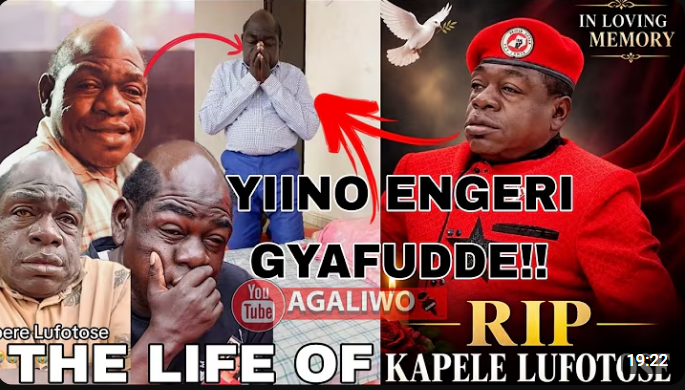
Ugandan comedian Yokana Mbuuse, widely known by his stage name Kapere Lufotose, has died. He passed away on Sunday, 1 November 2026, at a hospital in Buddo, Wakiso District. He was 56.
The cause of death has not been officially confirmed. Early reports indicated that Kapere was rushed to hospital after complaining of a severe headache. His management stated that he had not been suffering from any known long-term illness prior to the incident. Further details from the family or medical authorities were still awaited as tributes poured in.
Kapere rose to national prominence as a member of the Amarula Family comedy group, performing alongside Amooti Omubalanguzi (Allan Mujuni) and Messe Bontwe. He became a household name through his distinctive physical appearance, expressive facial gestures, energetic dance moves, and the popular “Lufotose” skits. What others once used to ridicule him, he transformed into a source of laughter and a successful entertainment career.
Beyond comedy, Kapere was an outspoken supporter of the National Unity Platform (NUP) and opposition leader Robert Kyagulanyi, popularly known as Bobi Wine. In 2025, he collected nomination forms with the intention of contesting for a councillor position in Makindye Division. He also featured in some of Bobi Wine’s music videos, including the hit song Mr Money.
Bobi Wine was among the first public figures to mourn him, describing Kapere as “our brother, dear friend and comrade… A man who made every dark moment light. A man who loved his country and wished it well.” Leader of the Opposition Joel Ssenyonyi also paid tribute, noting that he had met Kapere at the NUP offices in Kavule just a week before his death.
Kapere was married to Lydia Nakandi, popularly known as Mama Trump, and was a father. He often spoke candidly about a difficult childhood marked by the early loss of his mother and health challenges that delayed his education.
His sudden death has left a gap in Uganda’s comedy scene. Fans and colleagues remember him as a resilient performer who turned personal adversity into entertainment and later used his platform for political expression. Funeral arrangements had not been publicly announced at the time