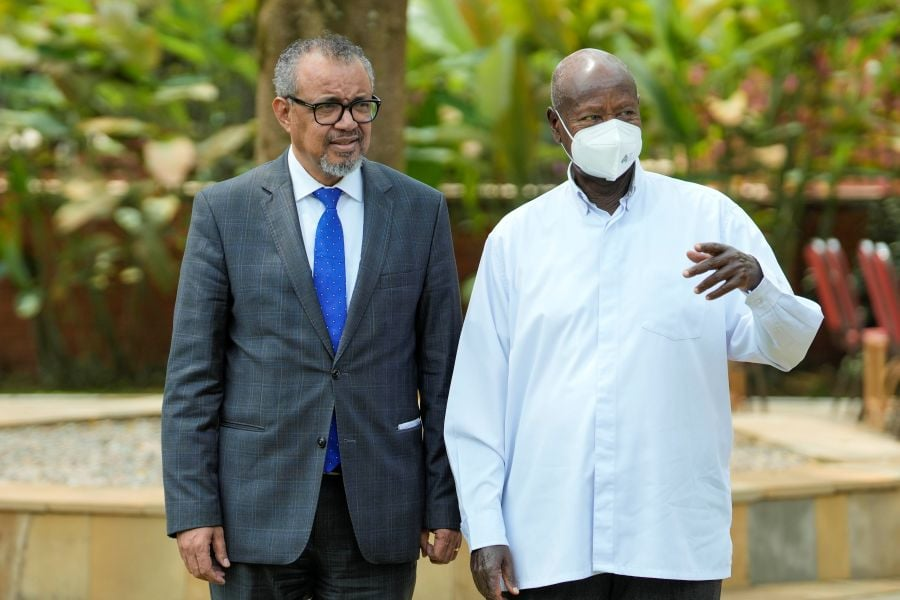
Kampala, Uganda | August 19, 2025 – President Yoweri Kaguta Museveni has held high-level discussions with Dr. Tedros Adhanom Ghebreyesus, the Director-General of the World Health Organization (WHO), at State Lodge, Nakasero.
The talks centered on strengthening Uganda’s health sector, with a focus on:
- Sustainable health financing to support universal access.
- Local pharmaceutical manufacturing to reduce dependency on imports.
- Public health insurance systems to improve long-term resilience and equity.
President Museveni emphasized Uganda’s commitment to building a robust health care system that can withstand future health emergencies while ensuring affordability for citizens.
About Dr. Tedros Adhanom Ghebreyesus
Dr. Tedros, who became WHO Director-General in 2017, is the first person from the African Region to lead the global health agency.
- Education: He studied Biology at the University of Asmara, later obtaining a Master’s degree in Immunology of Infectious Diseases (University of London), a PhD in Community Health (University of Nottingham), and an Honorary Fellowship from the London School of Hygiene and Tropical Medicine.
- Career: Before joining WHO, Dr. Tedros served Ethiopia as Minister of Health (2005–2012) and Minister of Foreign Affairs (2012–2016).
- Impact in Ethiopia: He spearheaded major reforms including the primary health care extension program, which deployed 40,000 female health workers to rural areas. His leadership contributed to a 60% reduction in maternal and child mortality compared to 2000 levels.
Why This Meeting Matters for Uganda
Uganda continues to face challenges such as inadequate health funding, dependence on imported medicines, and a growing demand for affordable health care.
The discussions between President Museveni and Dr. Tedros highlight the importance of partnerships between national governments and international organizations in building resilient health systems. Strengthening Uganda’s capacity in health care financing and local drug manufacturing is expected to reduce costs and improve access to essential medicines