
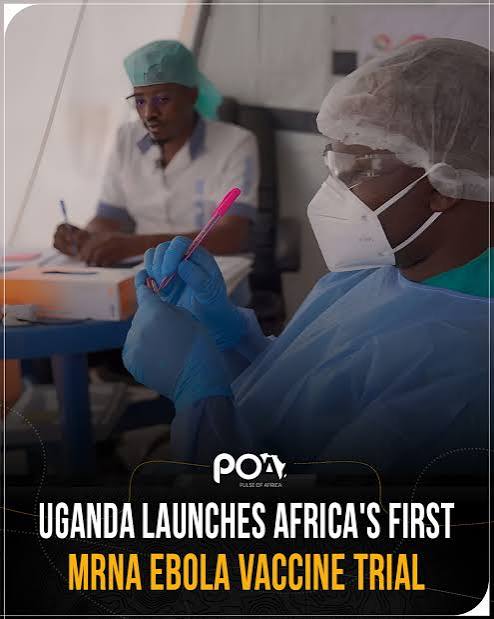
Kampala, Nov. 28, 2026 – Uganda has launched the first clinical trial in Africa of an mRNA vaccine against the Bundibugyo strain of Ebola. The strain is behind a deadly outbreak in neighbouring Democratic Republic of the Congo (DRC).
The state-run Uganda Virus Research Institute (UVRI) announced the start of the trial in a statement on Friday. It is being run in collaboration with Moderna, the United States company that makes the vaccine.
The trial aims to enrol 224 volunteers aged one to 65. It is the second human trial of the vaccine worldwide. Moderna began its first in Canada in August, but that study was limited to adults aged 18 to 65.
The Ugandan study is the first to test the vaccine’s safety and its ability to trigger an immune response in children aged one year and above.
“Children are often among those hardest hit when Ebola strikes, yet they are too often the last to benefit from new vaccines,” said Richard Hatchett, chief executive of the Coalition for Epidemic Preparedness Innovations (CEPI), which is helping to fund the vaccine.
An outbreak next door
The trial comes as the DRC battles a large outbreak. Government data released on Thursday showed at least 12,021 confirmed Ebola infections and 5,904 deaths since the outbreak began in mid-May. Testing of the vaccine is due to begin in the DRC on Monday.
Uganda has felt the threat directly. The country shares a long and porous border with eastern DRC and recorded imported cases earlier this year. In total it confirmed 20 infections and two deaths before declaring its outbreak over on July 28, according to the Ministry of Health.
Africanews reported that Uganda contained the virus despite the border risks. The outbreak also had consequences beyond health. Qatar has now lifted the Ebola-related entry and transit restrictions it had placed on Ugandan travellers, restoring normal passage through Doha.
Why mRNA matters
Unlike traditional vaccines, mRNA vaccines instruct the body’s own cells to produce a harmless piece of the virus, which trains the immune system to recognise it. Developers say the approach can be adapted relatively quickly when a new strain emerges. That matters for Bundibugyo, a less common Ebola species than the Zaire strain, for which fewer vaccine options exist.
Placing the trial in Uganda also puts research capacity on the continent that is hit by these outbreaks. Testing in African populations, and in children in particular, gives health officials data that is directly relevant to the people most at risk.
What happens next
This stage is designed to assess safety and immune response, not to prove that the vaccine prevents infection. Results will determine whether it moves to larger trials. UVRI and Moderna have not said when initial findings might be available.
For now, health officials in both countries are watching the DRC outbreak closely. The start of the trials in Kampala and Kinshasa is a sign that the response is moving from contain